
Messy Handwriting and What it Might Mean
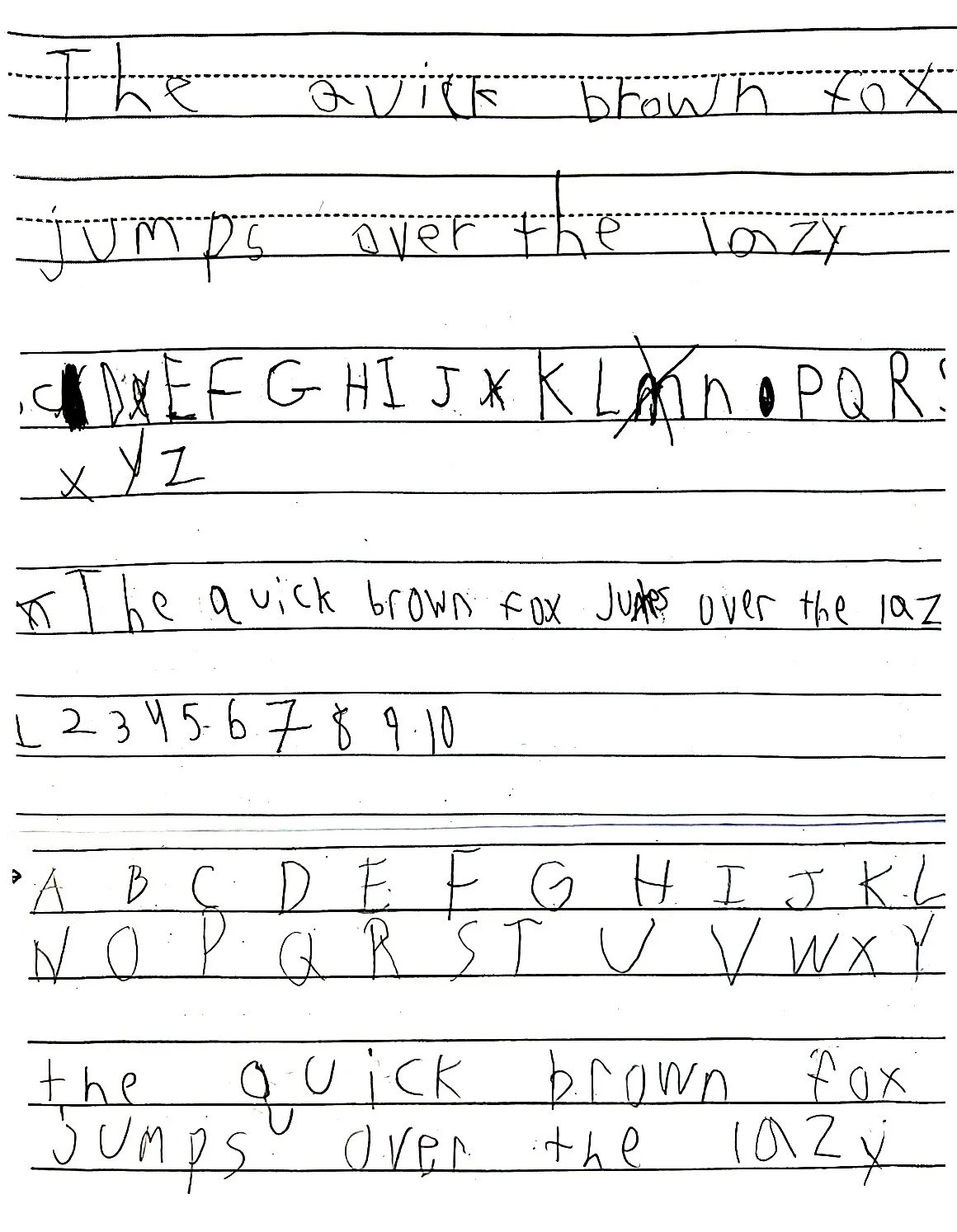
When your child’s handwriting is messy or hard to read, it often signals that writing feels especially challenging to them. For many children, these challenges reflect the complexity of writing, which requires the integration of fine motor coordination, visual-motor skills, planning, attention, working memory, and self-regulation.
The encouraging news is that the visible effects of “bad handwriting” actually provide valuable insight–with targeted support, many children develop greater proficiency and confidence in their writing.
Why “Bad Handwriting” Isn’t Just About Effort
Writing is a big job for growing brains and bodies! A child has to remember what a letter looks like and how it’s formed, while maintaining an appropriate grasp on their pencil, placing words on the provided line, remembering to leave a good amount of space between words, and keeping their ideas moving . . . all at the same time.
That’s why handwriting struggles are rarely about laziness or low intelligence. Sometimes a child is working very hard, but so much of their cognitive energy is either going into forming their letters or remembering what they want to write, that little energy is left for neatness, speed, spelling, or all the components of written expression.
What Counts as “Bad Handwriting” in Children?
“Bad handwriting” can show up in different ways. Parents often become concerned with their child’s handwriting when writing looks:
hard to read
uneven in size
poorly spaced
too light or too dark
off the line
rushed or unfinished
inconsistent from one sentence to the next
You may also notice that your child avoids writing tasks, complains that their hand is tired, grips the pencil very tightly–or oddly!–or takes much longer than expected to complete written work. Sometimes the concern is not only how the handwriting looks, but how much effort it takes to produce it.
5 Things “Bad Handwriting” Reveals About Your Child’s Development
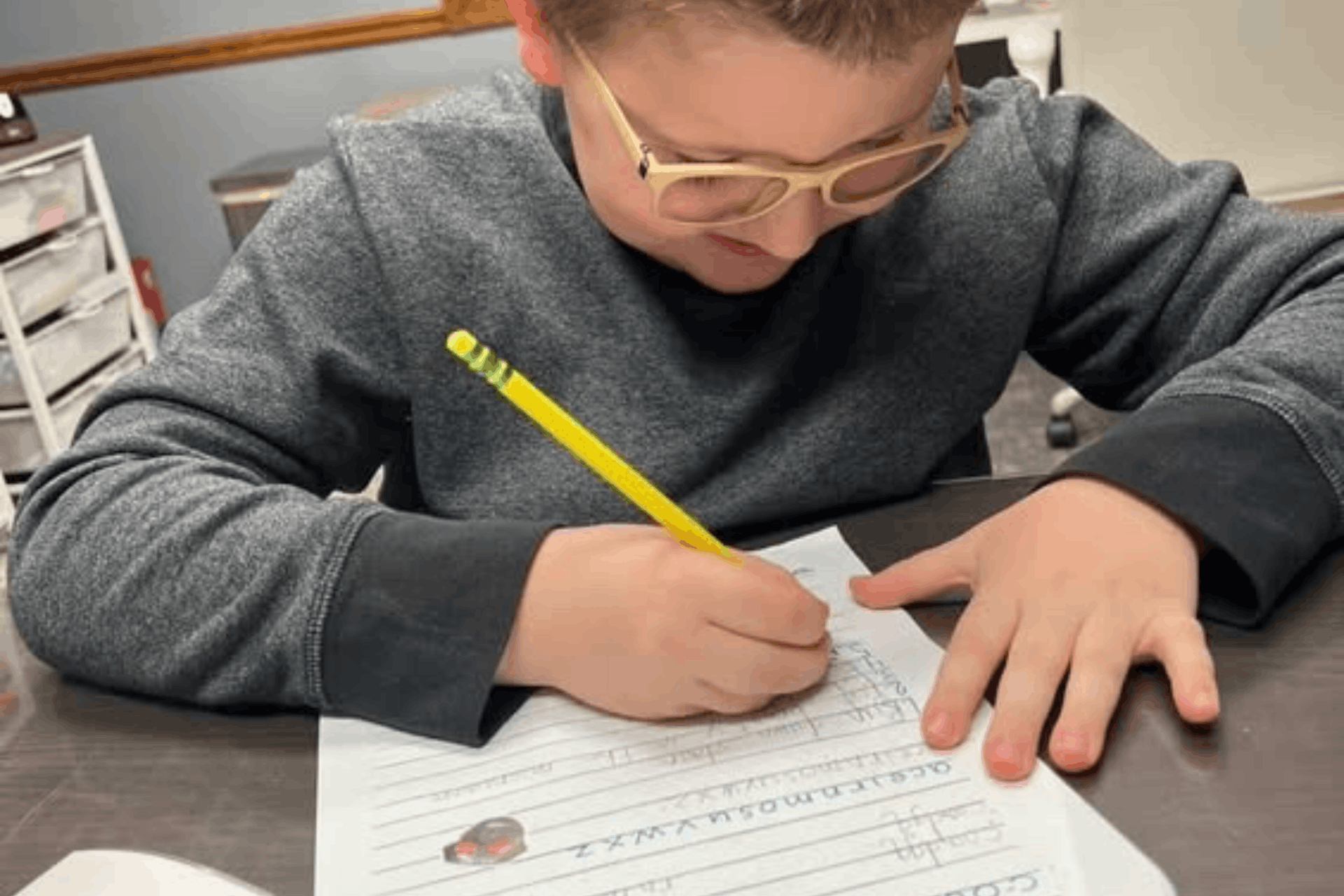
Handwriting can tell us a lot about the underlying skills your child is continuing to develop, and hasn't quite mastered.
#1: Fine Motor Skill Challenges
Fine motor skills help children control the small muscles in their hands and fingers. When fine motor skills are still developing, handwriting may look shaky, oversized, cramped, or just plain tiring.
If you are seeing similar struggles during play, consider practicing fine motor skills at home in a fun and engaging way!
#2: Visual-Motor Integration Difficulties
Visual-motor integration is the ability to coordinate what the eyes see with how the hand moves. In handwriting, that includes copying letters with the correct sequence of pencil strokes, coordinating their writing to carefully place words on the provided line, sizing “tall letters” and “short letters” with consistent ratios, and spacing words appropriately throughout each sentence.
When visual motor integration is underdeveloped, children may reverse letters, crowd words together, or lose their place on the page.
#3: Motor Planning and Coordination
Motor planning helps a child figure out how to move their body to complete a task. Writing relies on a sequence of many small, organized movements that become more smooth over time. When motor planning is hard, a child may start letters from unusual places, form the same letter differently each time, or pause frequently because writing has not yet become automatic.
#4: Attention and Executive Functioning
Handwriting also depends on focus and attention, working memory, and organization. A child must be grounded in the moment, remain focused, manage the pace of the task, and look ahead to what comes next. If executive functioning is a challenge, handwriting may look rushed, incomplete, and disorganized.
#5: EMOTIONAL REGULATION and Writing Avoidance
When children become aware that writing feels harder to them than it seems to feel to their peers, it can begin to affect their confidence. They may stall, shut down, or become upset when paper-and-pencil tasks show up. When a child starts to feel overwhelmed or embarrassed, handwriting becomes even more challenging.
How Handwriting Impacts School and Confidence
“Bad handwriting” affects more than how a page looks; it can shape how a child participates in class, how quickly they finish work, and how they feel about school overall.
A child may know the answer but avoid writing it down. They may have strong ideas, but struggle to get them onto paper in a way that teachers can read. Over time, difficulties with the skills involved with handwriting can chip away at confidence and make school feel heavier than it should–especially for smart and creative kids who have wonderful thoughts and ideas to contribute to the world!
Signs Your Child May Need Extra Support With Handwriting
You may want to schedule an evaluation with an occupational therapist (OT) if your child:
avoids writing whenever possible
has trouble forming letters consistently
struggles with spacing, sizing, or line use
complaints of hand fatigue or discomfort
grips the pencil awkwardly or very tightly
writes more slowly than peers
becomes frustrated or emotional during writing tasks
is starting to experience the effects that poor handwriting has on school participation and confidence
Common Causes of Handwriting Difficulties in Kids
Rest assured that there is no single cause of “bad handwriting”. For one child, messiness may reflect their underdeveloped motor skills, while for another, it may be connected to difficulty with the way they focus, process, plan, or respond to school demands.
If you’re noticing similar challenges outside of handwriting, it may also be helpful to learn about some of the less obvious signs of attention difficulties in children.
Children with ADHD may have trouble with attention, pacing, working memory, and written output, all of which can make handwriting look rushed, inconsistent, or hard to maintain, which is why learning more about the connection between ADHD and handwriting can be so helpful for families.
Children with autism may experience handwriting challenges related to motor planning, coordination, sensory needs, or the effort it takes to manage multiple demands at once.
A child can be bright and motivated, and still need more support than the classroom is able to provide on its own.
Simple Ways to Support Handwriting at Home
Home support doesn’t need to feel heavy. A few small shifts can help:
Keep writing sessions short and manageable.
Use broken crayons, short pencils, tweezers, stickers, and play-based hand activities to build strength.
Give your child visual models for letter formation.
Let them write on vertical surfaces like an easel or a window.
Focus on one or two goals at a time instead of correcting everything.
It may help to lower the pressure they feel during larger writing pieces as well. If your child freezes from the onset of a blank page, paragraph starters can give them an easier way to get started. They are especially helpful for kids who have great ideas but get stuck when it is time to put them on paper.
When Handwriting Struggles Mean It’s Time to Look Deeper
If handwriting continues to cause stress even with practice and support, it may be time to ask a few bigger questions. Is writing much harder for your child than it seems to be for peers, or their siblings? Is it affecting confidence, school participation, or the ability to show what they know? Are you seeing similar struggles with fine motor tasks, attention, or regulation in other parts of daily life?
When the answer is yes, an evaluation with an occupational therapist can provide some insight.
How Occupational Therapy Helps Improve Handwriting
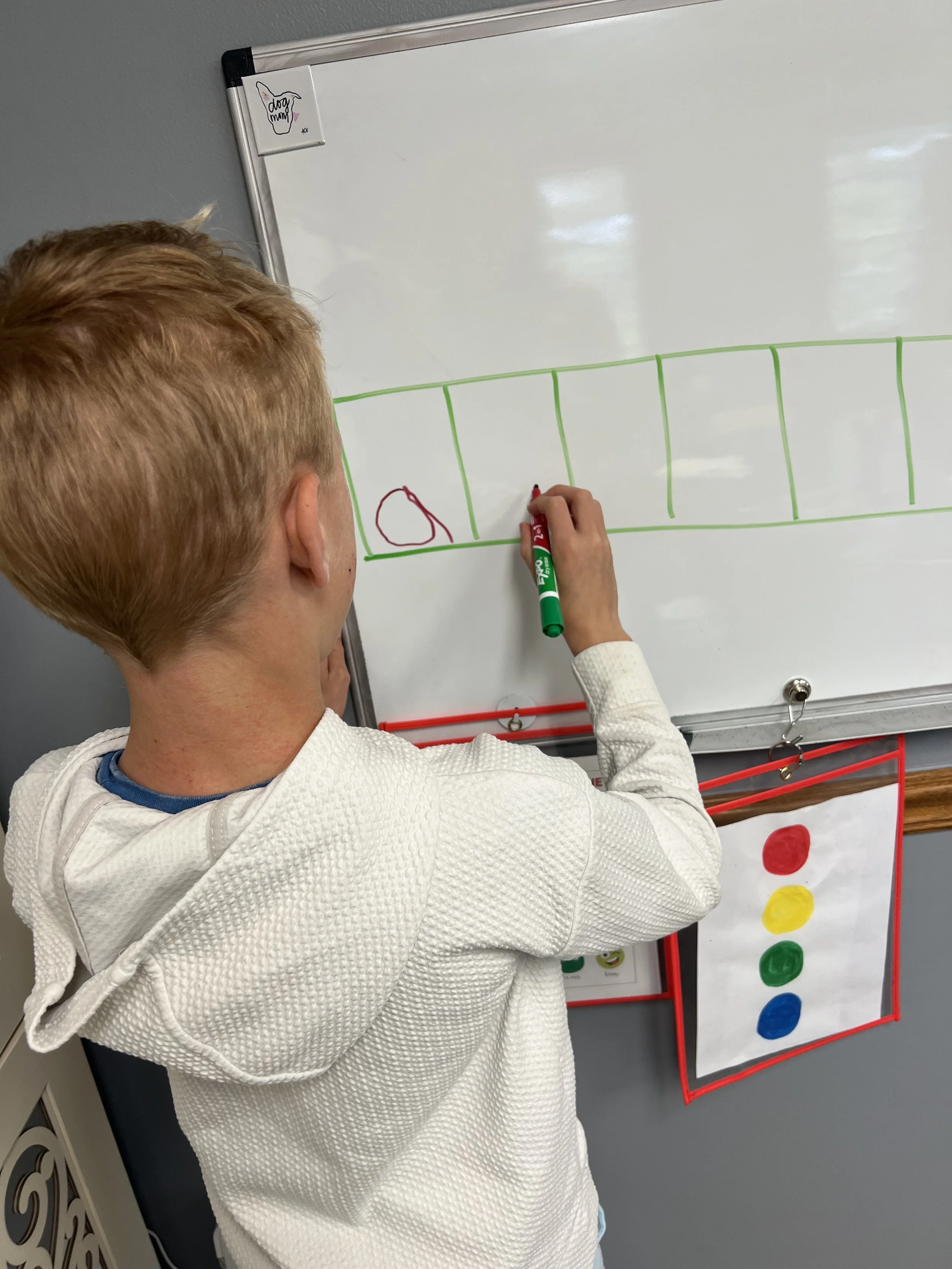
Occupational therapy (OT) addresses the underlying skills that make handwriting possible. Rather than focusing only on how writing looks, OT supports the development of fine motor coordination, visual-motor integration, attention, and regulation so writing becomes more efficient and less frustrating. At The ColorfullyEnthused Therapy Studio, services are designed to support meaningful progress in school and everyday tasks, while helping children build confidence along the way.
What an OT Evaluation Can Tell You About Your Child
An evaluation by an occupational therapist can help you understand why handwriting feels hard and what support may help most. During an evaluation, an OT breaks down the task to look at its pieces and parts and the skills involved with each step.
We assess whether a strange pencil grasp is due to reduced hand strength or underdeveloped fine motor coordination and manual dexterity. Or we may find that messy handwriting is due to not understanding the correct way to form letters or poor spatial relations. Children’s illegibility may be due to weak endurance, impeding their posture, sensory processing differences, or impaired visual motor integration.
No matter the cause, an occupational therapy evaluation offers a comprehensive picture of your child’s needs, as well as individualized recommendations and practical next steps that carry over into home and school routines.
Bad Handwriting: Frequently Asked Questions
What does it mean if you have bad handwriting?
“Bad handwriting,” which is actually just describing messy handwriting, often means that writing requires extra effort because of challenges with fine motor skills, visual-motor coordination, motor planning, attention, or regulation. It does not automatically reflect intelligence or effort.
Is “bad handwriting” linked to higher IQ?
Messy handwriting is not a sign of higher IQ. Some very bright children do have messy handwriting, but handwriting quality is more closely tied to the skills needed to produce writing clearly and efficiently.
Is dysgraphia a learning disability?
Yes. Children with dysgraphia struggle with letter formation, spacing, spelling, and getting ideas onto paper. Occupational therapy can help manage dysgraphia by strengthening the underlying skills needed for writing, while giving families practical strategies to make school tasks feel more manageable.
Do people with ADHD have “bad handwriting?”
Some do. ADHD can affect attention, pacing, working memory, and motor planning, which can make handwriting harder for children with ADHD.
Build Your Child’s Handwriting Skills With Ashlee Schmitt, MOT, OTR/L

It’s amazing how much progress kids can make when they have the right support and someone who truly believes in them. If you’re ready to learn how occupational therapy can support your child’s handwriting and improve their confidence, schedule an evaluation with Ashlee Schmitt, MOT, OTR/L of ColorfullyEnthused LLC. You and your child don’t have to sort through this alone.