
6 Paragraph Starters to Help Your Kiddo Write with Confidence (2026)
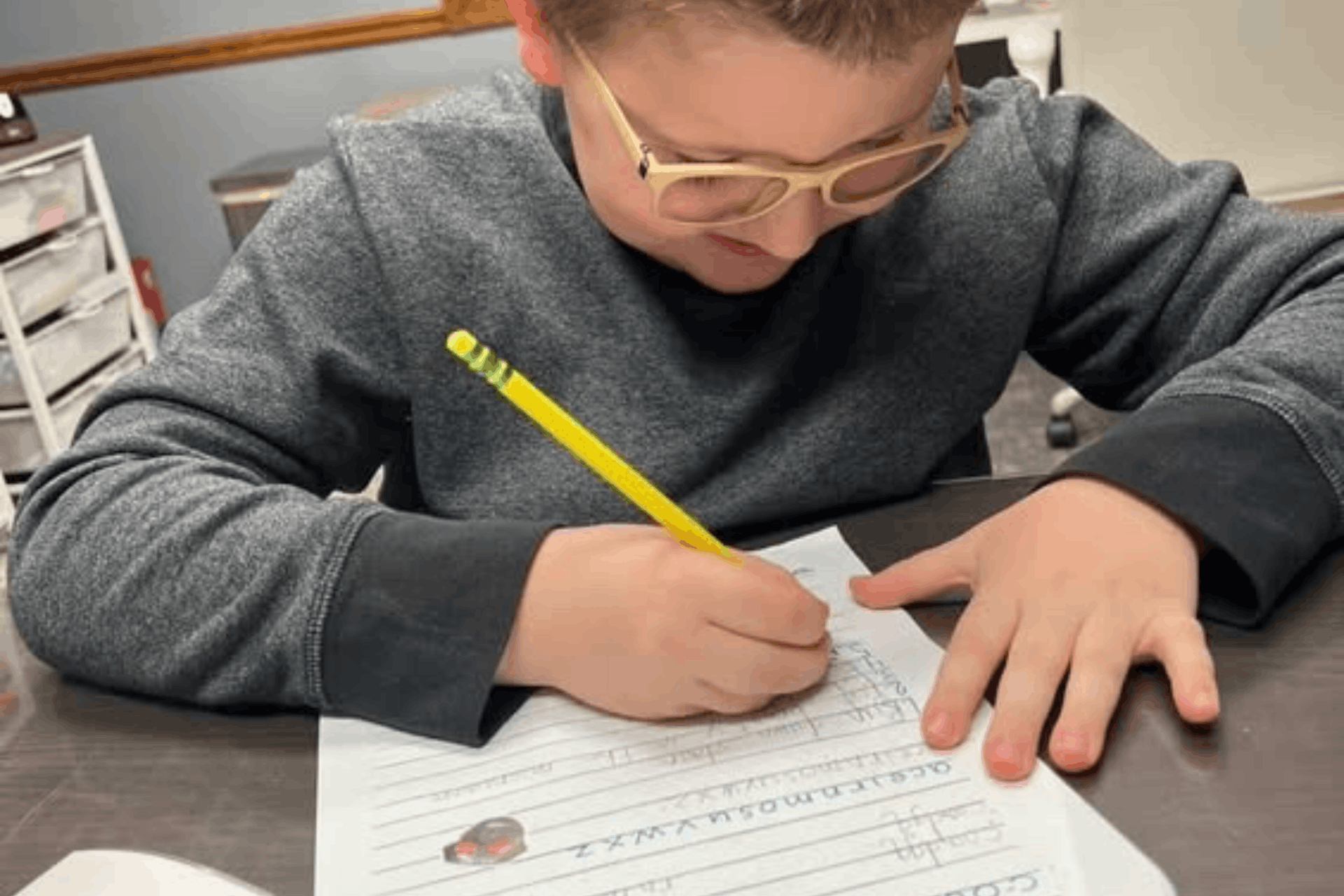
If your kiddo freezes the second a blank page hits the table, you’re in good company. Writing is deceptively hard for growing brains.
Writing asks a lot more of children than we often realize. They must organize their thoughts and plan what they want to say (hello, executive function), recall how to spell each word, and coordinate their fingers to form letters that are legible and neatly aligned on the line, all while working against tired hands and rising frustration that can quickly turn into, “I don’t know what to write!”
The good news? Writing confidence grows with the right supports, and paragraph starters are one of the most effective.
Why A Blank Page Feels So Hard
Research shows that very few kids choose to write for fun outside of school, and a big reason is that getting started can feel overwhelming.
Without a clear way to begin, occupational therapists understand that the blank page can feel intimidating. Kids freeze, avoid, or shut down, not because they lack creativity, but because they don’t have a comfortable entry point into the task.
When a child doesn’t have a clear entry point, writing can feel like too much, too fast. The solution isn’t more pressure; it’s better support. That’s where paragraph starters come in and make writing feel manageable again.
What Are Paragraph Starters?
Paragraph starters are simple prompts that help children begin writing. Instead of staring at a blank page, wondering what to say, kids are given a starting point that provides direction and momentum.
A strong paragraph starter includes just enough context—such as a scenario, character, question, or sensory detail—to help a child shift from “I don’t know what to write” to “I can write about this!”
Unlike sentence starters, which support the structure of a sentence (like “I think…” or “One reason…”), paragraph starters spark their imagination. They reduce the mental effort of inventing a topic from scratch and make it easier for children to organize their thoughts, get words flowing, and build confidence on the page.
6 Types of Paragraph Starters
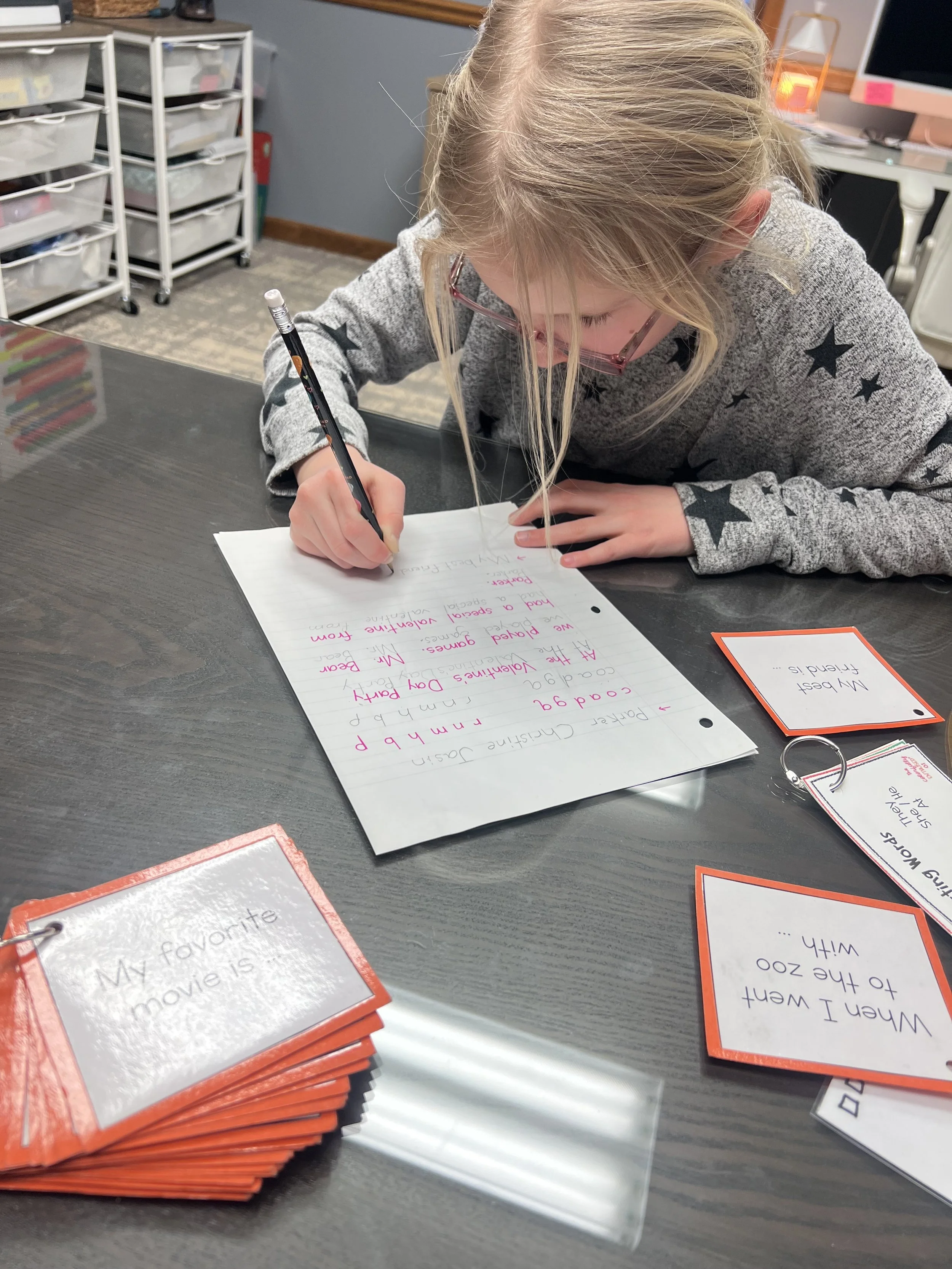
Paragraph starters come in many flavors, and each serves a different purpose: Some ignite creativity, some support organization and clarity, and some provide kids the freedom to express their unique stories, emotions, opinions, and even their sense of humor! Below are five common types you can use at home. Feel free to mix and match!
#1. “What If?” Starters (Creative Thinking & Imagination)
These prompts open the door to alternate realities, magical thinking, and big imaginative leaps, which is a great fit for kids who love make-believe stories and role-playing.
For younger writers: “What if your breakfast suddenly came alive and started talking to you?”
For older writers: “What if every time you told a lie, a little piece of the world changed?”
For neurodivergent writers: “What if you woke up and your favorite toy could talk to you?”
#2. Sensory-Based Starters (Descriptive Writing & Detail)
Sensory-based paragraph starters help kids build descriptive language by focusing on sight, sound, smell, taste, and touch, which is awesome for reluctant writers because the senses give them a concrete place to start.
For younger writers: “I smelled something amazing in the kitchen and followed the smell to…”
For older writers: “The air was thick with rain and the metallic scent of the subway tracks…”
For neurodivergent writers: “I heard a sound behind me, and it made my skin feel tingly…”
#3. Character & Story Starters (Narrative Skills)
These prompts push kids to think about character development, including goals, actions, and the impact of cause-and-effect, which are all foundational aspects of structuring a story.
For younger writers: “The tiny robot woke up late for school and had to rush to…”
For older writers: “She had been planning her escape for months, but today was the day…”
For neurodivergent writers: “The dog needed help from his friend to finish a big job…”
#4. Emotion-Based Starters (Self-Expression & Emotional Literacy)
Perfect for kids who prefer to talk about feelings in small doses, these prompts normalize writing about emotions and can support self-regulation.
For younger writers: “I felt nervous when the curtain opened, but then…”
For older writers: “The moment I realized things were going to change forever, I felt…”
For neurodivergent writers: “When I feel frustrated, I like to…”
#5. Mystery & Adventure Starters (Curiosity & Plot Building)
Paragraph starters involving mystery and adventure invite suspense, problem-solving, and action. These are helpful for kids who need a little adrenaline to get words flowing.
For younger writers: “We followed the sparkly trail into the woods and found…”
For older writers: “The letter arrived with no return address and only three words written inside…”
For neurodivergent writers: “I opened the box, and something surprising was inside…”
#6. Real-Life Starters (Personal Narrative & Executive Function)
These paragraph starters help kids structure the experiences of everyday life into stories that make sense. Many kids who participate in occupational therapy (OT) benefit from these in particular because they support planning, sequencing, and perspective-taking.
For younger writers: “First, we packed our bags for the trip. Then…”
For older writers: “The hardest part about trying something new is usually the beginning…”
For neurodivergent writers: “Today I practiced doing something on my own. It was…”
How You Can Use Paragraph Starters at Home

You don’t need elaborate materials or a perfectly organized writing space to help your child grow in writing confidence. Paragraph starters are easy to use at home because they relieve the pressure of coming up with something on your own and instead provide a clear, supportive place to begin.
Make Writing Feel Safe, Not Stressful
When children feel overwhelmed by open-ended prompts, reducing the pressure can make all the difference. Treat writing time as a low-stakes activity. Approach writing together as an opportunity to explore rather than perform. Let your child choose a starter, select their topic, jot down ideas freely, revise as they go, or even dictate their thoughts if the physical act of writing feels challenging.
Use Short, Manageable Writing Sessions
Lengthy writing tasks can quickly feel overwhelming for children. Brief sessions—such as ten minutes after school or five minutes before bed—are often enough to build consistency. Small, frequent successes are more impactful than long writing periods.
Prioritize Effort Over Perfection
When children take the risk to write, their creativity and effort deserve recognition! Skills like handwriting, spelling, and mechanics can be refined over time as writing confidence grows.
Use Paragraph Starters as a Warm-Up, Not an Assignment
Paragraph starters work well as brief “warm-ups” before homework, journaling, or other writing tasks. They help children organize their thoughts and feel more prepared when independent writing is expected.
Invite Them to Share Their Writing (If They’d Like To)
Offering your child the opportunity to read their writing aloud can build confidence, strengthen oral language skills, and create a sense of pride in their work. Even a small, friendly audience at home can make the experience meaningful.
Paragraph Starters: Frequently Asked Questions
Do ADHD kids struggle with writing?
Yes. Many kids with ADHD struggle with writing because it requires attention, planning, sequencing, and working memory. These skills make it hard to organize ideas, get words onto the page, and finish assignments. Signs that a child with ADHD may be struggling include rushing through work, missing details, difficulty getting started, or cognitive fatigue.
What is a good starter for a paragraph?
A strong paragraph starter gives children a clear direction for their writing. It may introduce a scene, pose a question, describe a feeling, or spark curiosity. For example: “The moment I opened the door, I knew something unusual was about to happen.” Paragraph starters help children move past the blank page and begin writing with confidence.
Can OT help with writing for kids?
Yes. Occupational therapy can support many of the foundational skills that make writing easier and more successful for children. This may include handwriting, fine motor coordination, pencil grasp, organization, visual-motor integration, executive functioning, and emotional regulation. When these skills are strengthened, writing often feels less frustrating and more manageable.
Work with ColorfullyEnthused* LLC to Build Your Child’s Confidence
If writing has become a daily struggle, or if you’d like to help your child feel more confident with handwriting, occupational therapy can help. At The ColorfullyEnthused Therapy Studio, we use engaging, skill-building strategies to support handwriting, organization, fine motor development, and emotional resilience so writing feels manageable—and even enjoyable. Interested in learning whether OT could support your child’s writing? Let’s talk.