
Occupational Therapy vs Physical Therapy: A Parent’s Guide

You’re doing everything you can to support your child, but at some point it’s hard not to wonder: Is this just a phase, or does my child need extra help?
When your child avoids the playground, melts down during homework, or struggles to keep up with peers, it’s natural to start searching for answers. Unfortunately, sorting through the endless acronyms—OT, PT, ST—often creates more confusion than clarity.
Let’s simplify it.
Here’s a clear guide to the difference between occupational therapy (OT) and physical therapy (PT), and how to determine which may best support your child.
What Is Physical Therapy for Children?
Pediatric physical therapy focuses on helping children move with strength, balance, and coordination. PT supports the body’s large movement systems so kids can run, jump, climb, and participate in play with confidence.
Physical therapy is especially helpful when a child needs support with gross motor skills, endurance, balance, or recovery after an injury or medical event. For many children, PT helps them keep up with peers during recess, gym class, and sports. PT is often recommended when a child has:
Delays in gross motor milestones
Balance or coordination difficulties
Fatigue during physical activity
Reduced strength or endurance
Movement challenges related to neurological or orthopedic conditions
Recovery needs following an injury or surgery
What Is Occupational Therapy for Kids?
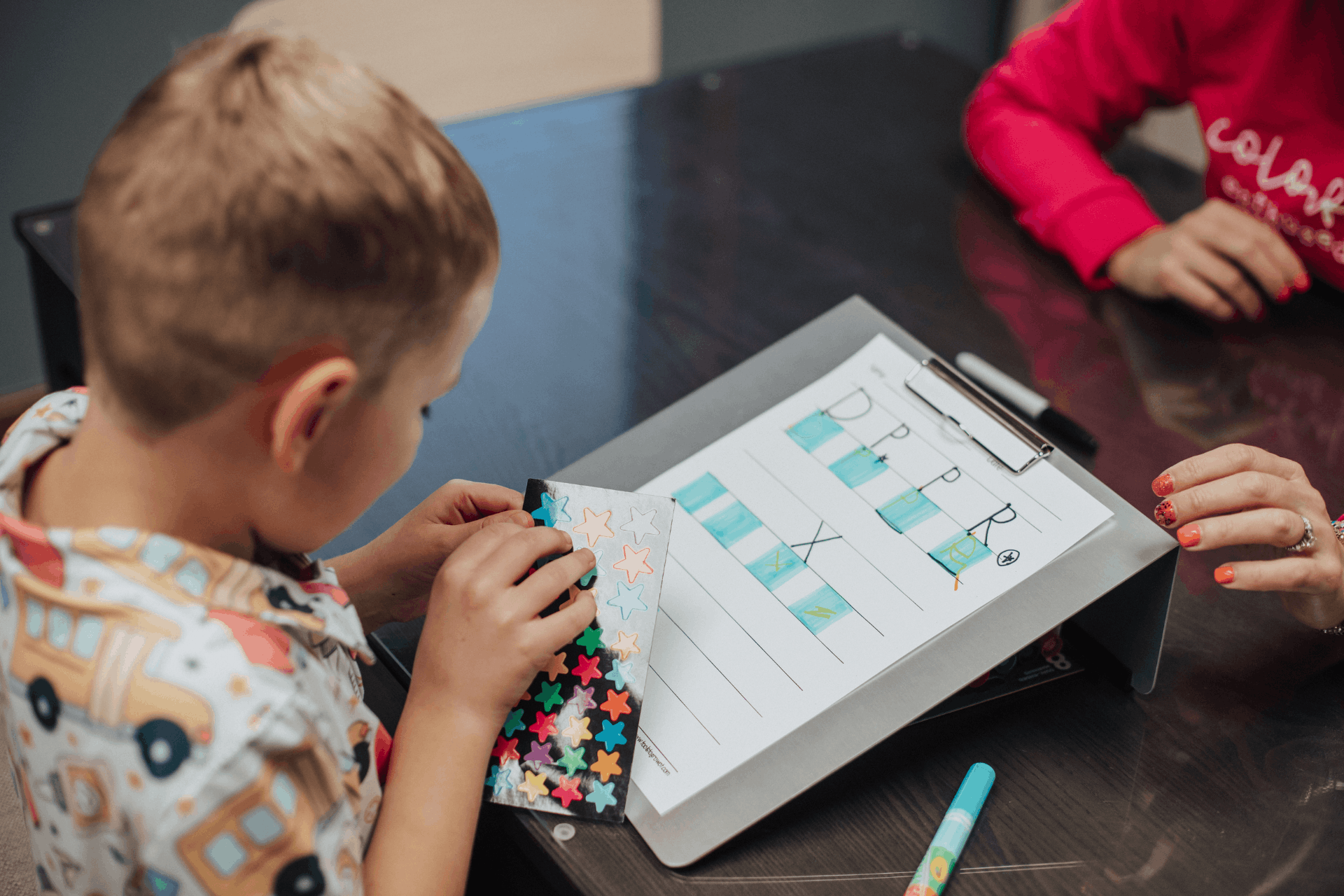
Pediatric occupational therapy focuses on helping children participate successfully in the activities of daily life across home, school, and the community.
This includes tasks such as getting dressed, managing emotions, writing at school, following routines, organizing materials, and fully engaging in play. OT supports the underlying skills that make those tasks possible, including:
Fine motor coordination
Visual processing
Attention and executive functioning
Sensory processing
When these skills improve, everyday life becomes more manageable, and children feel more confident in what they do. OT is often recommended when a child has difficulty with:
Handwriting, cutting, drawing, or coloring
Fine motor tasks like puzzles, Legos, or buttons
Transitions, routines, or multi-step directions
Sensory sensitivities
Focus on regulating their bodies and emotions
Do I Need Occupational Therapy or Physical Therapy for My Child?
According to the U.S. Centers for Disease Control and Prevention (CDC), approximately 1 in 6 children, or 17%, in the United States has at least one developmental delay. While both therapies support development, they address different skill areas.
A helpful way to decide is to look at what feels hardest for your child in daily life.
If big movement, balance, strength, or endurance seem to be the main challenges, PT may be the right place to start.
If daily tasks like writing, dressing, following routines, or managing emotions feel overwhelming, OT is often the better fit.
When Children Benefit From Both OT and PT
Many children benefit from both therapies, and the right mix depends on your child’s needs—it’s also expected that their needs will evolve over time.
For example, a child may need PT to improve balance and endurance for playground play, while OT helps them stay regulated, follow directions, and engage socially with peers. OT and PT often work beautifully together to support:
Recess and playground participation
Sports and gym class confidence
School tasks and classroom routines
Self-care and independence
Emotional and social development
How to Choose the Right Therapy for Your Child

Choosing between occupational therapy and physical therapy is confusing at first, especially when you’re just trying to help your child feel successful. Here’s a simple way to sort through the options so you can make a confident choice.
Step #1: Start With What You Notice
Write down what you’re seeing at home, school, and during play. This becomes your starting point.
Step #2: Decide What Feels Most Urgent
Ask yourself: What would make daily life easier for my child right now?
Step #3: Talk With Your Child’s Team
Share your observations with teachers, pediatricians, or school staff and ask what they notice.
Step #4: Look for Pediatric Specialists
Seek therapists who specialize in pediatrics and clearly describe the skills they address.
Step #5: Schedule an Evaluation
An evaluation will clarify which therapy—or combination—is most appropriate.
Step #6: Ask Questions
You’re choosing a teammate for your child. Make sure it feels like a good fit.
How ColorfullyEnthused* LLC Supports Children and Families
ColorfullyEnthused LLC provides individualized, pediatric occupational therapy designed to support functional skills for home and school while building regulation, confidence, and independence.
Parents are involved from the start and receive clear communication and practical strategies to support progress across environments. The goal is to help children develop meaningful skills while helping families feel informed and supported every step of the way.
Occupational Therapy vs Physical Therapy: Frequently Asked Questions
Can my child receive both occupational therapy and physical therapy?
Yes! Many children benefit from both occupational therapy and physical therapy when different skill areas need support. Occupational therapy focuses on daily life skills like handwriting, routines, regulation, and fine motor coordination, while physical therapy focuses on movement, balance, strength, and gross motor skills. When both areas affect your child’s participation at home, school, or play, a combined approach helps address each need in a coordinated way.
What does an occupational therapist do for children?
A pediatric OT helps children build the skills they need to improve their independence and success with daily activities such as handwriting, routines, regulation, and fine motor coordination so they can participate more successfully at home and school.
How many OT sessions will my child need?
Most plans of care are designed around consistent weekly sessions over several months. The exact plan depends on your child’s needs and goals. At The ColorfullyEnthused Therapy Studio, treatment plans are often written for 24-28 weekly sessions.
Help Your Child Grow With Confidence: Work with Ashlee Schmitt, MOT, OTR/L
Kids are capable of so much more than what they think; often, they just need the right cheerleader in their corner. If you’re ready to explore how occupational therapy can support your child’s development, schedule an evaluation with Ashlee Schmitt, MOT, OTR/L of ColorfullyEnthused LLC. You don’t have to figure this out alone.