
16 Fun Fine Motor Activities to Help Your Child Grow

If everyday tasks such as cutting with scissors or tying their shoes feel frustrating for your child, they are not alone. The development of fine motor skills takes time and consistent practice, and these skills continue to emerge throughout the elementary years.
Children are managing a significant number of developmental demands. Their brains are continuously processing new information, which can make certain tasks feel more challenging than expected. Taking a step back to intentionally support skills that are still developing can be especially beneficial.
Through structured, supportive practice in engaging activities, fine motor skills can be strengthened—helping movements feel more efficient and restoring confidence in daily tasks.
What Are Fine Motor Skills?
Fine motor skills are the small, precise movements that your child makes with their hands and fingers andthat open the door to so many joyful moments: creating art or building something just-right, and then proudly exclaiming, “I did it myself!”
While the movements underlying these moments appear simple on the surface, they rely on remarkable coordination between hand strength, sensory processing, and visual-motor integration to support smooth, confident, and intricate motion.
When Do Fine Motor Skills Develop in Children?
Great question! Fine motor development begins early in life, then continues to grow throughout childhood and into adolescence. Between ages 5-12, children are working to refine skills like:
Letter formation and legibility
Scissor control
Managing fasteners
Using tools like a hole punch and glue for creative tasks
Fine-motor challenges become more noticeable as classroom expectations increase. However, challenges don’t always indicate that something is “wrong.” Rather, challenges provide us with feedback; they give us information we can use to guide instruction. Perhaps your child’s nervous system needs more time and repetition, bold visual cues to direct their movements, or a different kind of support.
Fine Motor Activities Support Confidence and Success
Fine motor skills affect how children interact with their daily world. As these skills develop, tasks feel more manageable, and confidence grows. Fine motor skills support:
Academic success, including writing, math, and art tasks
Self-care, such as dressing, buttoning, and opening packages at lunch
Play and participation, including games, sports, crafts, and hands-on fun
Independence, giving kids the joy of saying, “I’ve got this.”
Confidence, helping children feel capable and empowered
When fine-motor tasks feel especially challenging, children may withdraw from them. This avoidance is often a signal of discouragement, and that the task’s demands currently feel too high. If this pattern persists over time, it can chip away at confidence and make everyday tasks feel even more stressful.
The encouraging news is that supportive, developmentally appropriate activities can help children feel safe enough to try again. With gentle guidance and positive reinforcement, fine motor skills can strengthen over time, making tasks feel easier and your child more independent.
5 Simple Ways to Help Your Child’s Fine Motor Skills
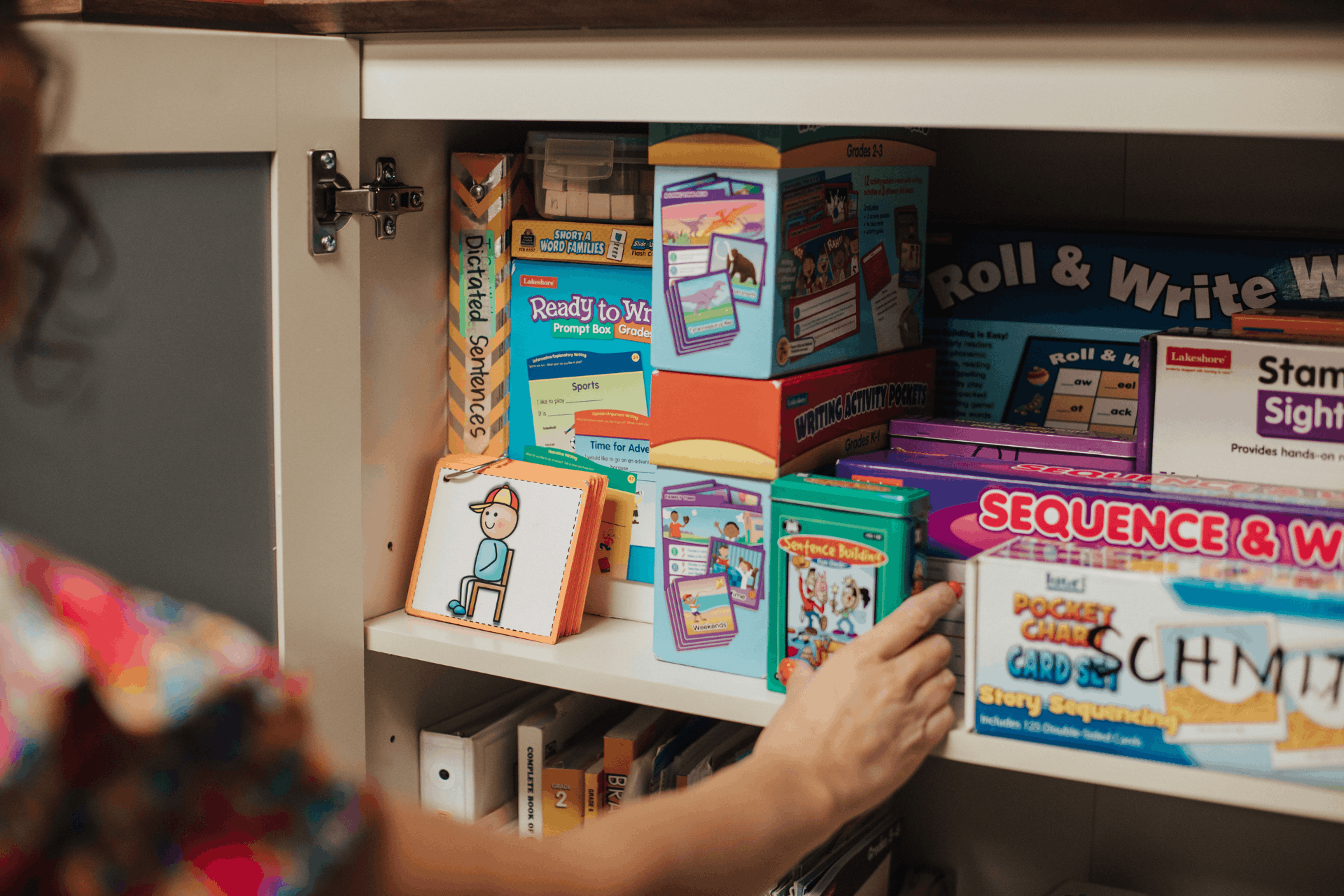
#1. Play with materials that build hand strength
Strong hands are needed to support coordination,control, and endurance during fine motor tasks of everyday life. Activities that involve squeezing, pulling, or molding help hands grow stronger while having fun.
#2. Encourage activities that develop precision and control
Small, intentional movements, like using small strokes to color within the lines of a picture, or pinching a string to thread it between holes, or lacing beads to make a bracelet, help children refine the accuracy of their coordination, which directly supports fine motor skills.
#3. Introduce fine motor practice into creative play
Creativity lowers pressure and boosts confidence. Cut and glue with construction paper to make a craft for a family member, or trace a picture with tracing paper! When kids are engaged and having fun, growth happens without pressure.
#4. Use everyday routines for skill-building
Daily routines offer countless opportunities to practice and strengthen fine motor skills. There’s no need for stressful drills or tedious worksheets when everyday self-care tasks already provide meaningful practice. With a little planning and extra time, activities like squeezing toothpaste onto a toothbrush, buttoning a shirt, tying shoes, or zipping a coat can become calm, confidence-building moments rather than rushed challenges.
#5. Add games that challenge coordination and focus
Games bring laughter and skill-building together, making practice feel light and enjoyable! Board games with small pieces, card games, and building games that involve pinching, squeezing, and placing can strengthen fine motor skills without feeling like “work.” If frustration shows up, pairing these activities with simple self-regulation strategies can help children reset and keep going.
16 Play-Based Fine Motor Activities Kids Love
We’ve curated a collection of child-approved fine motor activities for ages 5–12 that support skill development while keeping practice approachable and engaging. Best of all, these activities are easy to implement at home!
Activity #1: Play with Play-Doh
Rolling and shaping dough builds hand strength and finger coordination.
Activity #2: Finger Paint
Tracing simple drawings with a finger encourages finger isolation and sensory exploration.
Activity #3: Build with Blocks
Stacking and balancing blocks strengthens coordination and problem-solving skills.
Activity #4: Play with Legos and Duplos
Building with Legos or Duplos supports grasp strength, bilateral coordination, and hand strength.
Activity #5: Plan String Activities
Threading pasta or beads builds visual-motor integration and control.
Activity #6: Play with Containers
Twisting lids and snapping closures strengthen functional hand skills.
Activity #7: Ripping or Crumpling Paper
Manipulating paper is a simple but powerful way to build hand strength and tactile awareness.
Activity #8: Sorting Coins or Beads
Sorting by size or color builds precision and visual attention.
Activity #9: Cutting on a Line
Start with straight lines on thick paper, then move toward curves and shapes.
Activity #10: Putting Pegs into a Pegboard
Matching shapes to holes that will fit them is great for visual perception and bilateral coordination.
Activity #11: Leaf Rubbings with Crayons
Creating leaf rubbings with crayons supports pressure control while making something beautiful.
Activity #12: Playing Connect 4™
This kid-favorite game combines grasp strength and visual motor planning.
Activity #13: Jenga™
Playing Jenga™ encourages focus, control, and steady hand movements.
Activity #14: Operation™
Using tiny tweezers in this game challenges coordination, finger strength, and self-control in an exciting way.
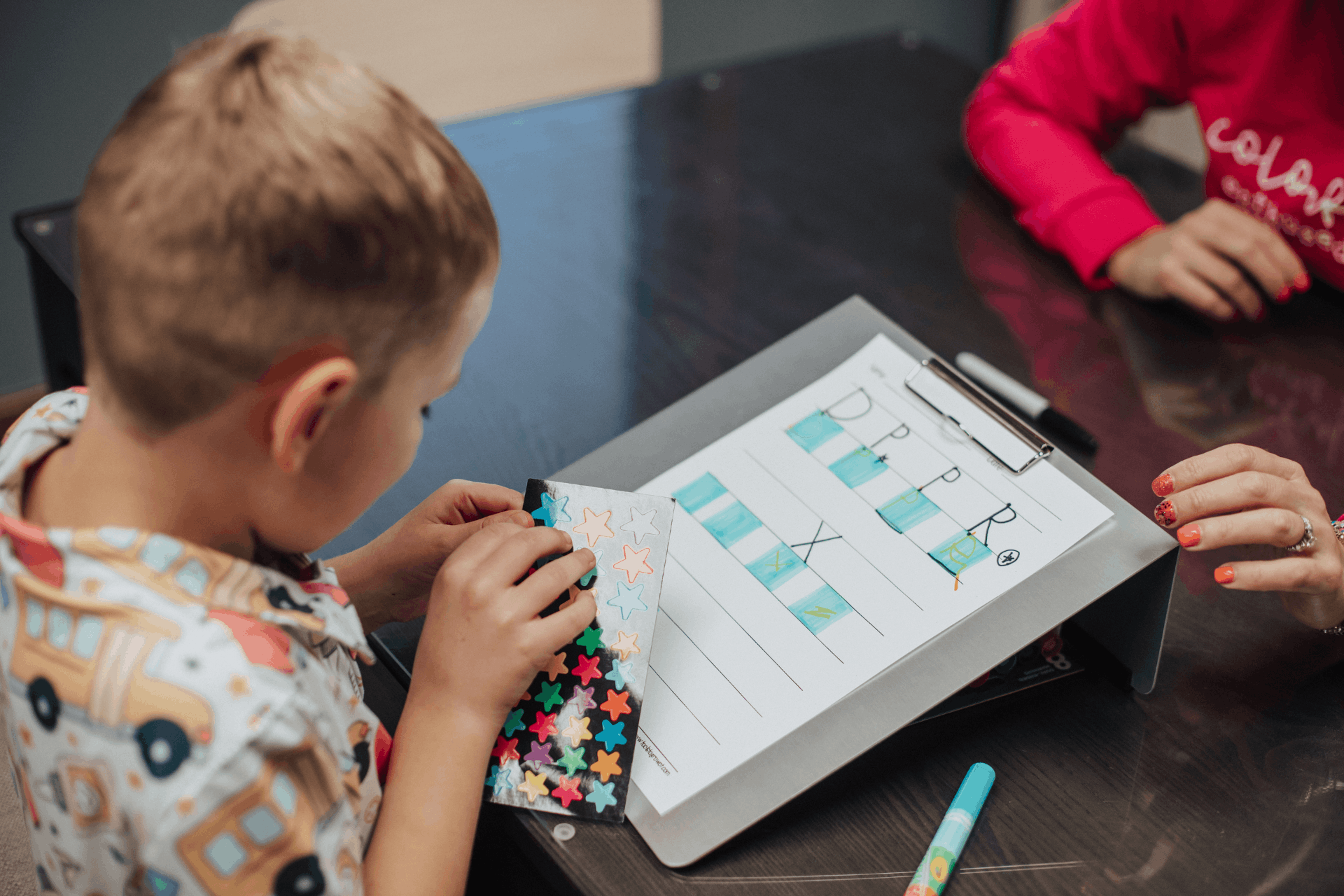
Activity #15: Peeling and Placing Stickers
Practicing sticker placement is excellent for developing the pincer grasp and visual motor integration, especially for kids who avoid writing.
Activity #16: Popping Bubbles
Popping bubbles with a finger strengthens visual tracking, timing, aim, and coordination.
How Occupational Therapy Supports Fine Motor Growth
When fine motor challenges affect a child’s confidence or independence, occupational therapy can provide meaningful, targeted support. Pediatric occupational therapy focuses on developing the foundational skills children need to participate more comfortably and successfully in daily routines, school tasks, and play.
Occupational therapists take a whole-child, individualized approach—designing engaging, developmentally appropriate interventions that support skill development while fostering confidence. For many children on the autism spectrum, fine motor development is closely linked to sensory processing and self-regulation, making occupational therapy a particularly effective and supportive intervention.
Fine Motor Activities: Frequently Asked Questions
What are 5 examples of fine motor skills?
Buttoning clothing, opening containers, using utensils, cutting with scissors, and writing one’s name are everyday tasks that require fine motor skills and help children care for themselves and participate confidently at home and school.
What are good activities for fine motor skills?
Play-Doh, Legos, lacing holes, stringing beads, cutting and coloring, making crafts, sticker play, and many board games strengthen hand skills while keeping practice fun and pressure-free.
What are the big 6 fine motor skills?
Grasp strength, finger isolation, bilateral coordination, visual-motor integration, precision, and endurance work together to help children use their hands smoothly, accurately, and comfortably over time.
What causes poor fine motor skills?
Fine motor challenges can stem from developmental differences, low muscle tone, sensory processing challenges, coordination difficulties, or limited endurance. Pediatric occupational therapy helps children strengthen these foundational skills in a supportive, confidence-building way.
Help Your Child Grow With Confidence and Joy: Work with Ashlee Schmitt, MOT, OTR/L

If fine motor tasks have become frustrating for your child, or you’re hoping to build more confidence in everyday tasks, occupational therapy can help. Ashlee Schmitt, MOT, OTR/L, uses thoughtful, skill-building strategies to support fine motor development in ways that feel achievable, encouraging, and even fun. Wondering whether occupational therapy could support your child’s fine motor growth? Let’s connect!