
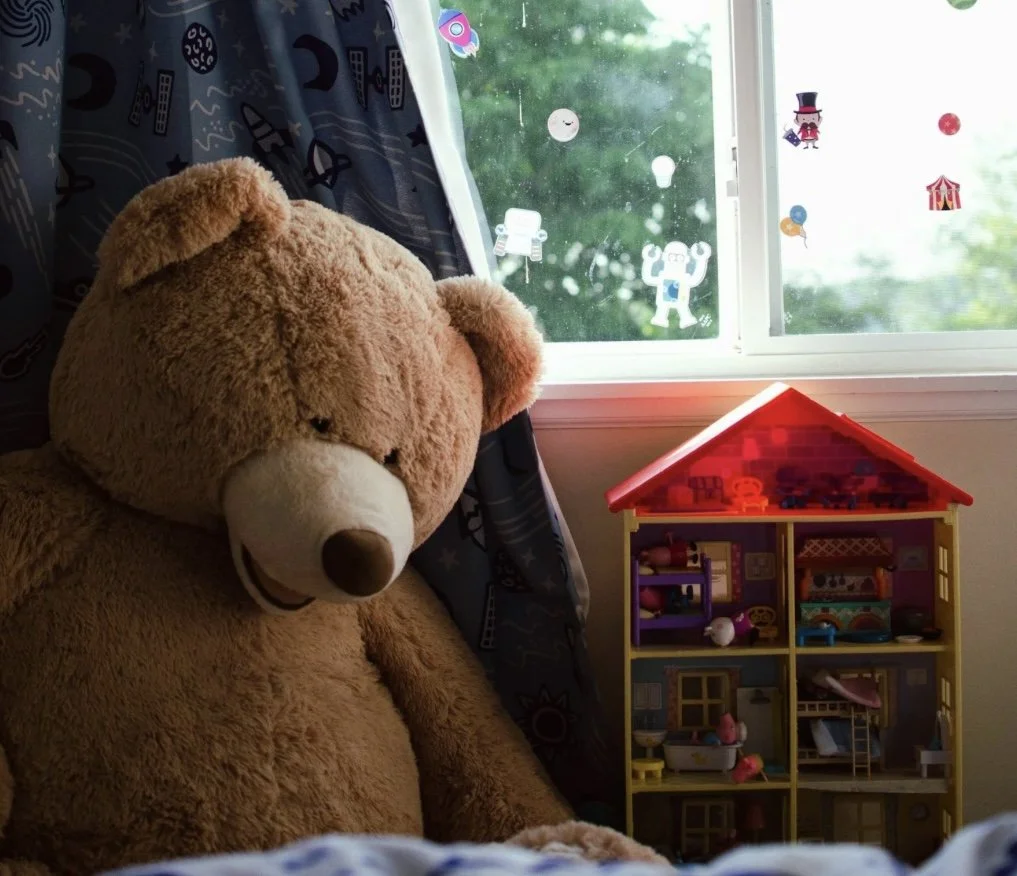
The school day is over. Your child walks through the door, drops their backpack, and heads straight to their bedroom.
Maybe they crawl beneath a blanket, retreat into a cozy corner, or put on their headphones. Maybe they're unusually quiet. Or maybe they're irritable, overwhelmed, and seemingly upset by every little thing.
After spending the day listening, learning, socializing, managing expectations, and navigating a busy environment, your child may simply need a break.
And that break isn't necessarily something to discourage. For many children, having a comfortable, predictable space to decompress can be an important part of managing the demands of everyday life.
With Christmas approaching, it's worth considering gifts that do more than entertain. Some of the most meaningful gifts are those that help children feel comfortable, confident, emotionally and physically safe, and supported in their own space.
Why Do Some Kids Need So Much Downtime?
Think about everything a child manages during a typical school day.
There are academic expectations, transitions between activities, background conversations, fluorescent lights, crowded hallways, unexpected changes, and countless opportunities for social interaction.
Meanwhile, children are expected to regulate their emotions, control their impulses, maintain attention, follow directions, and respond appropriately to the people around them. That's a lot to manage!
For children with ADHD, autism, anxiety, or sensory processing differences, certain aspects of the school day may require additional effort. A child with ADHD may spend considerable energy trying to sustain attention, inhibit impulses, and manage transitions. A child with autism may find the unpredictability of social interactions, changes in routines, or sensory demands of the classroom particularly exhausting. A child experiencing anxiety may spend more time of the day than you think… anticipating problems, worrying about expectations, or navigating situations that they feel are uncomfortable. And a child with sensory processing differences may have to work especially hard to tolerate sounds, lights, movement, touch, or other sensory experiences that their peers barely notice.
Of course, these experiences vary tremendously from child to child, and many children experience overlapping challenges.
The important thing to recognize is that a child can have a successful school day and still arrive home completely exhausted by the effort it required.
It's Not Just About School
Weekends can be equally demanding!
Birthday parties, holiday gatherings, sporting events, family outings, and even activities children genuinely enjoy can involve significant sensory, emotional, and social demands.
Think about a busy Thanksgiving gathering with family: overlapping conversations, unfamiliar foods, excited children, music, bright decorations, and relatives eager to visit.
For some children, that environment is exciting and energizing. For others, it's enjoyable for a while but eventually becomes overwhelming. And sometimes, it's both!
Needing to step away doesn't necessarily mean a child is being antisocial, ungrateful, or uninterested. It may simply mean they've reached their capacity for stimulation and need an opportunity to recharge.
Creating a Space to Decompress
A calming space doesn't need to be elaborate or expensive.
It might involve a tent bed, a reading nook, a beanbag chair, a corner of the bedroom, or simply a comfortable spot with a favorite blanket. What matters most is that the space feels safe, predictable, and personally meaningful to the child.
For some children, calming means reducing sensory input: dimming the lights, minimizing noise, and limiting conversation. For others, calming involves adding preferred sensory experiences, such as gentle movement, tactile exploration, familiar music, or visually engaging objects. And for others, an enjoyable activity that provides structure and predictability can be just as restorative as quiet rest.
There isn't one universally calming sensory experience.
The goal isn't to create a space that looks calming to adults. It's to create a space that actually feels calming to the child using it.
12 Christmas Gift Ideas for a Calming, Engaging Bedroom
The American Academy of Pediatrics presents a strong stance for screen-free relaxation. Whether you're shopping for a child who loves sensory experiences, a teenager who needs quiet time after school, or someone who enjoys creative activities without a lot of social demands, the following gift ideas offer a variety of opportunities for screen-free relaxation and independent entertainment.
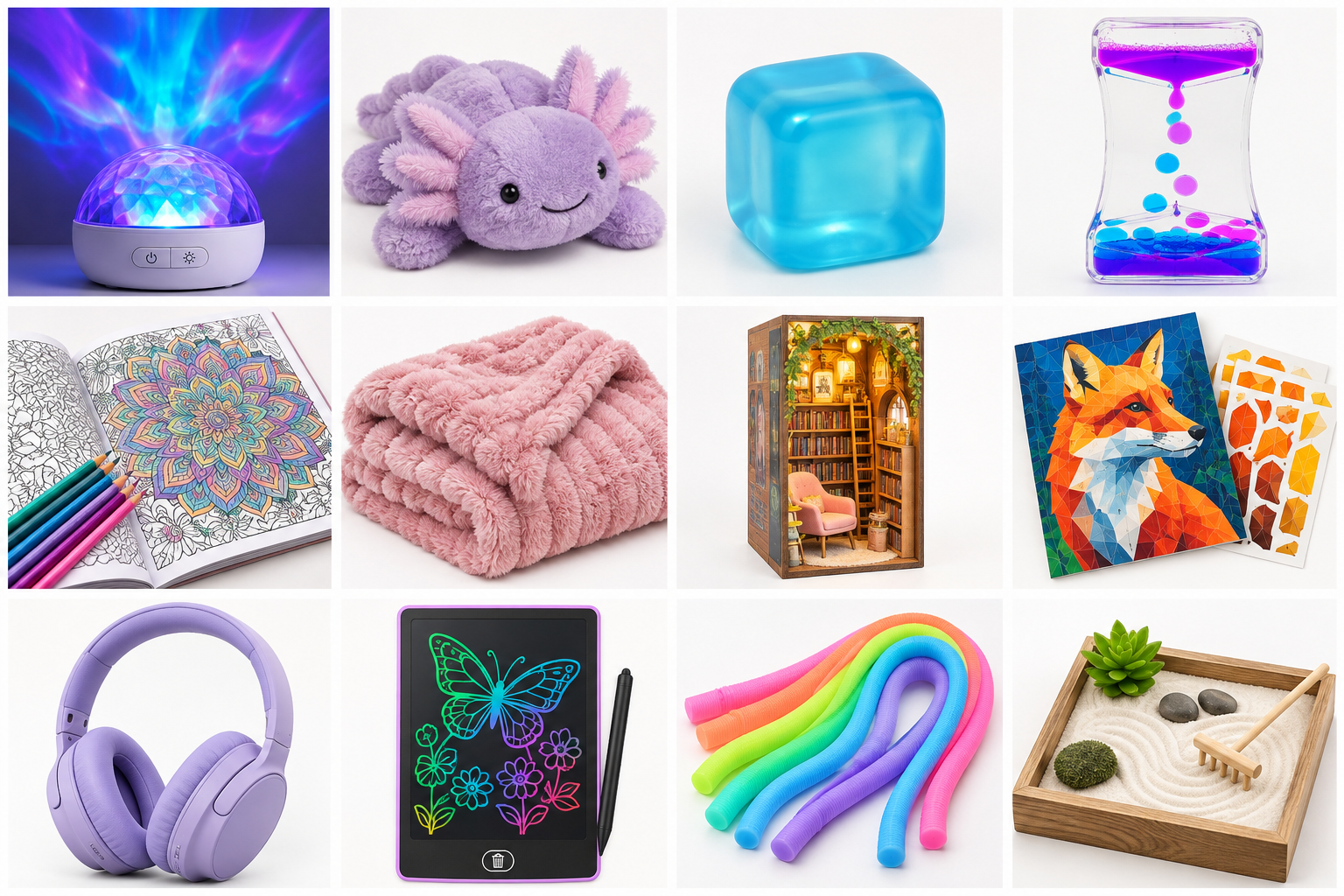
1. Aurora Projector, Ocean Wave Light, or Lava Lamp
Gentle, repetitive visual experiences can be enjoyable for children who find predictable movement and changing colors relaxing. An aurora projector or ocean wave light can transform a bedroom into a softly illuminated space without requiring any active participation.
A lava lamp offers a similar opportunity to watch slow, continuous movement, making it another fun option for children who enjoy visual sensory experiences.
While shopping, look for options to adjust brightness, slow the frequency, and remove flashing effects.
Shop: Sensory projector lights at Target | Lava lamps at Target
2. Weighted Stuffed Animal or Lap Pad
Some children find gentle, steady pressure comforting, particularly while reading, listening to music, or relaxing after a busy day.
Weighted stuffed animals offer a playful, age-flexible alternative to traditional weighted products, while lap pads or weighted blankets can provide similar input during seated activities.
The important consideration is personal preference. Not every child enjoys weighted items, and heavier doesn't necessarily mean better.
Choose an appropriate weight that the child can comfortably move and remove independently.
Shop: Weighted lap pads and comfort items at Target
3. NeeDoh Nice Cube
Sometimes, keeping the hands occupied provides just the right amount of engagement.
The NeeDoh Nice Cube is a squishy, resistive fidget that can be squeezed and manipulated repeatedly without requiring a particular outcome. It's a great option for children and teenagers who enjoy tactile exploration (think: nail pickers!) and prefer activities that don't involve instructions, competition, or the expectation to finish something.
Shop: NeeDoh Nice Cube options on Amazon
4. Liquid Motion Timer
These colorful sensory tools feature droplets that slowly travel through a clear container, creating a repetitive and predictable visual experience.
For children who enjoy watching patterns or movement, a liquid motion timer can provide an interesting focal point during quiet downtime. They're also compact enough to keep on a nightstand, desk, or shelf.
Shop: Liquid motion sensory timers on Amazon
5. Mandala or Pattern Coloring Books
Coloring isn't just for little kids!
Detailed patterns, mandalas, and age-appropriate coloring books can provide a creative activity with relatively few demands.
Children can choose their own colors, work at their own pace, and stop whenever they'd like.
For a child who enjoys creative expression but feels overwhelmed by open-ended projects, structured coloring pages may be especially appealing.
Pair a coloring book with gel pens, colored pencils, a big box of crayons, and a small lap desk for a complete Christmas gift.
Shop: Mandala coloring books on Amazon
6. Soft, Textured Throw Blanket
Sometimes, the simplest gifts become the most frequently used.
A soft fleece, plush, or minky blanket can add comfort to a child's favorite resting space. Some children enjoy rubbing or manipulating a preferred texture, while others simply appreciate being wrapped in something soft and familiar.
Because tactile preferences vary considerably, consider allowing your child to help choose the material.
Shop: Plush throw blankets at Target
7. Miniature Building or Book Nook Kit
For children and teens who enjoy creating, organizing, or following visual instructions, miniature building kits can offer a wonderfully engaging independent activity.
Book nook kits often involve constructing tiny rooms, libraries, shops, or imaginative scenes. They provide opportunities for fine motor coordination, visual attention, sequencing, and problem-solving.
And unlike many traditional toys, the finished product can become a decorative piece for the child's bedroom.
Choose a kit that matches the child's interests and frustration tolerance. Some kits contain very small pieces or require considerable patience.
Shop: Miniature book nook kits on Amazon
8. Paint-by-Sticker Activity Books
Paint-by-sticker books offer a creative alternative to traditional coloring. Children match numbered stickers to corresponding spaces, gradually building a colorful image.
The structure makes the activity predictable, while the completed pictures provide a satisfying visual result.
These books can be especially appealing to children who enjoy art but dislike messy materials or find it difficult to decide what to draw.
Shop: Paint-by-sticker books on Amazon
9. Comfortable Noise-Canceling Headphones
For children who are sensitive to background noise, having greater control over their auditory environment can make a meaningful difference.
Noise-canceling headphones may help reduce distracting sounds during quiet time, while also allowing children to listen to favorite music, audiobooks, or familiar stories.
Look for comfortable ear cushions, adjustable fit, and features that allow the child to control how much sound is reduced.
Shop: Noise-canceling headphones at Best Buy
10. Reusable Drawing Tablet
A reusable drawing tablet offers opportunities for doodling, writing, tracing, and creative expression without requiring paper, markers, or cleanup.
Some children enjoy the repetitive process of drawing and erasing, while others use drawing as a quiet way to occupy themselves while listening to music or relaxing.
For children who enjoy visual creativity, a simple drawing tablet can be a convenient addition to their bedroom.
Shop: Reusable drawing tablets on Amazon
11. Stretchy Sensory Strings
Stretchy sensory strings are flexible fidgets that can be pulled, twisted, stretched, and manipulated repeatedly.
They provide opportunities for tactile exploration and input to the muscles and joints of the hands.
Because there's no particular task to complete, children can engage with them for as little or as long as they'd like.
These are best suited for children who can use flexible sensory materials safely without mouthing them or wrapping them around their bodies.
Shop: Stretchy sensory fidgets on Amazon
12. Mini Zen Garden
A miniature Zen garden offers a combination of tactile exploration, repetitive movement, and creative arrangement.
Using small rakes, stones, and sand, children can create patterns, rearrange objects, and experiment with different designs.
For children who enjoy orderly, predictable activities, the repetitive process may be particularly satisfying.
A Zen garden works best on a stable tabletop rather than directly in bed and is most appropriate for children who can safely manage the small pieces and loose sand.
Shop: Miniature Zen gardens on Amazon
A Few Things to Remember Before You Shop
Although these items are often described as sensory-friendly or calming, that doesn't mean every child will enjoy them.
A child who is sensitive to visual stimulation may dislike a projector. Someone who prefers firm tactile input may find a soft, squishy fidget uninteresting. A child who finds fine motor tasks frustrating may not enjoy a detailed craft kit.
And an activity that feels relaxing one day may feel overwhelming on another day.
Before purchasing, consider what your child naturally gravitates toward when they have free time.
Do they seek quiet? Movement? Soft textures? Repetitive activities? Familiar music? Creative projects?
Those preferences can provide valuable clues about what might make their personal space more comfortable.
It's also worth remembering that rest doesn't always need to be productive.
If your child wants to spend time beneath a blanket, listening to music, or simply doing nothing after school, that may be exactly what they need.
The purpose of these gifts isn't to fill every quiet moment with an activity. It's to provide meaningful options that children can choose when they're ready.
The Best Gift Might Be Permission to Take a Break
As parents, it's natural to want our children to participate, socialize, and make the most of their time. But learning to recognize when we need a break is an important life skill, too.
For children with ADHD, autism, anxiety, or sensory processing differences, recognizing and communicating those needs may require additional support. Creating a comfortable space where children can step away from demands, explore preferred activities, and recharge can be one way to support that developing self-awareness.
And especially during the busy holiday season, it's worth reminding our children that they don't have to participate in every activity, conversation, or gathering without a break.
Sometimes, the most meaningful gift we can give them isn't another activity to do.
It's a comfortable place to rest, a few enjoyable ways to recharge, and the reassurance that taking a break is perfectly okay.

Supporting Your Child's Self-Regulation
At The ColorfullyEnthused Therapy Studio in Westerville, Ohio, occupational therapy services are individualized to help children develop skills for participating more confidently and successfully in everyday activities.
This may include supporting sensory processing, emotional regulation, executive functioning, self-awareness, and the ability to recognize and respond to their own needs.
If your child frequently becomes overwhelmed after school, struggles with transitions, or has difficulty finding strategies that help them feel regulated, occupational therapy may be one avenue of support.
Learn more at www.colorfullyenthused.org
Shopping links are provided for convenience and are not sponsored recommendations. Products should be selected based on each child's developmental abilities, individual preferences, and safety needs. Lava lamps can become hot and should be placed securely away from bedding and unsupervised use when appropriate.